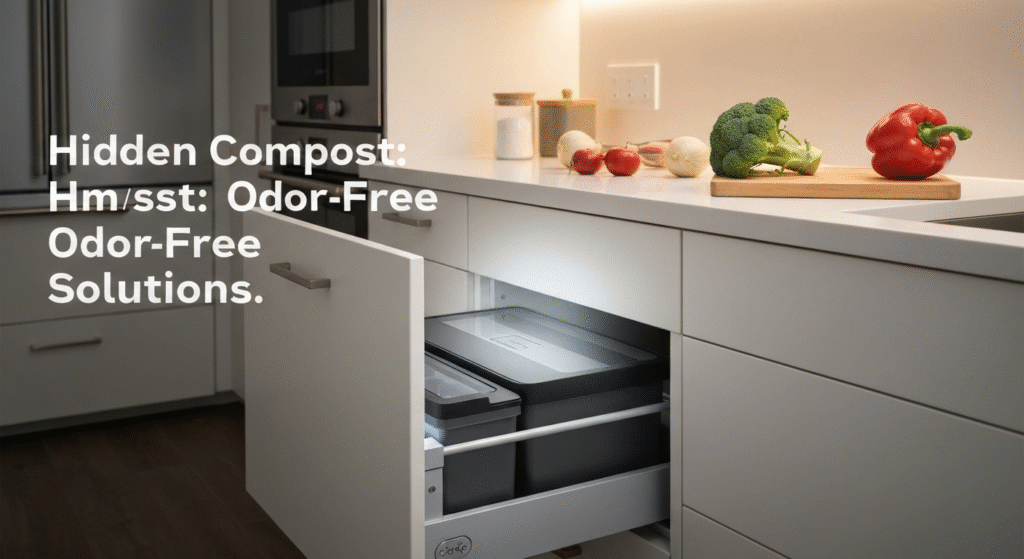
Composting at home is a fantastic way to reduce waste and enrich your garden, but let’s be honest: the traditional countertop bin can be a hassle. It takes up precious counter space, can attract fruit flies, and sometimes, despite our best efforts, it just doesn’t smell great. Many people think this is just the price of being eco-friendly. But what if there was a way to compost seamlessly, without the clutter and odors, by integrating the whole system right into your kitchen cabinetry?
As someone who has spent years helping people design smarter, more efficient kitchens, I’ve seen firsthand how a well-planned space can change daily routines. Edom Clark here, and for years, I’ve been obsessed with finding storage solutions that are both beautiful and incredibly practical. My journey into kitchen organization isn’t just about finding a place for everything; it’s about creating systems that support a lifestyle. Integrating composting into the very fabric of the kitchen—discreetly and cleanly—has become a passion project, born from countless conversations with homeowners who wanted to be sustainable without sacrificing their kitchen’s design or hygiene.
Why an In-Drawer Compost System is a Game-Changer
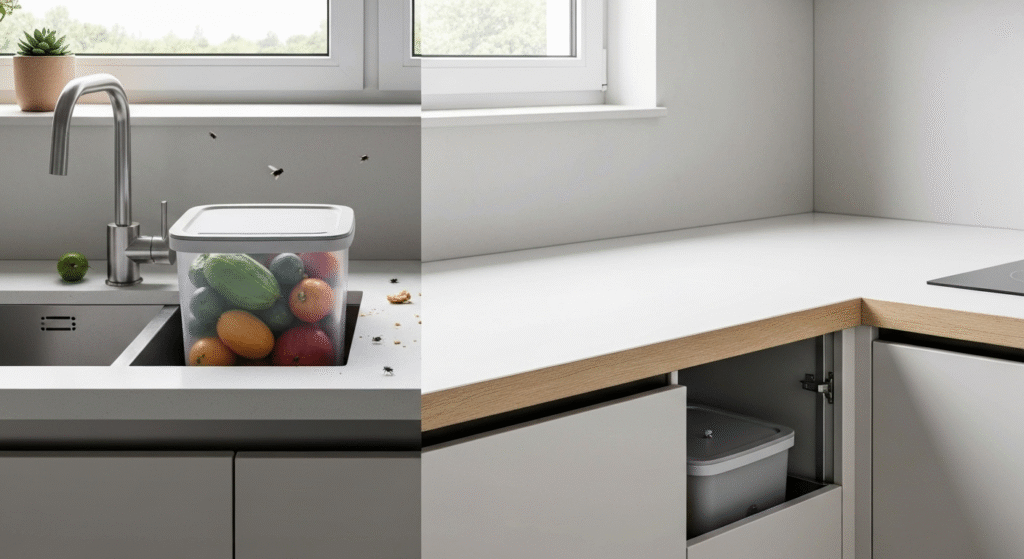
Moving your compost off the counter and into a drawer isn’t just about hiding it. It’s about fundamentally upgrading your kitchen’s workflow and cleanliness. The benefits go far beyond simple aesthetics.
The Core Advantages of Integrated Composting
- Reclaim Your Counter Space: Your countertops are for cooking and preparation, not for clutter. An in-drawer system frees up this valuable real estate, giving you a cleaner, more open kitchen.
- Superior Odor Containment: A well-designed drawer system with a sealed lid is far more effective at trapping odors than a countertop caddy. The cabinet itself provides a second layer of containment.
- Deter Pests for Good: Fruit flies and other pests are drawn to the food source. By placing your compost in a sealed, enclosed drawer, you effectively cut off their access, keeping your kitchen more hygienic.
- Streamlined Workflow: Most integrated systems are installed near the sink or your main prep area. This means you can sweep scraps directly from the cutting board into the bin in one smooth motion, making cleanup faster and more efficient.
I remember working with a family in a modern apartment who were passionate about reducing their waste but were constantly frustrated by their countertop compost pail. The smell was a frequent complaint, and they felt it ruined the sleek look of their new kitchen. We designed a pull-out drawer system right next to their sink, featuring a dual-bin setup with tight-sealing lids. The transformation was immediate. Their composting became effortless, invisible, and completely odor-free. It proved to me that with the right system, sustainability doesn’t have to be a compromise.
The Anatomy of a Perfect Drawer Compost System
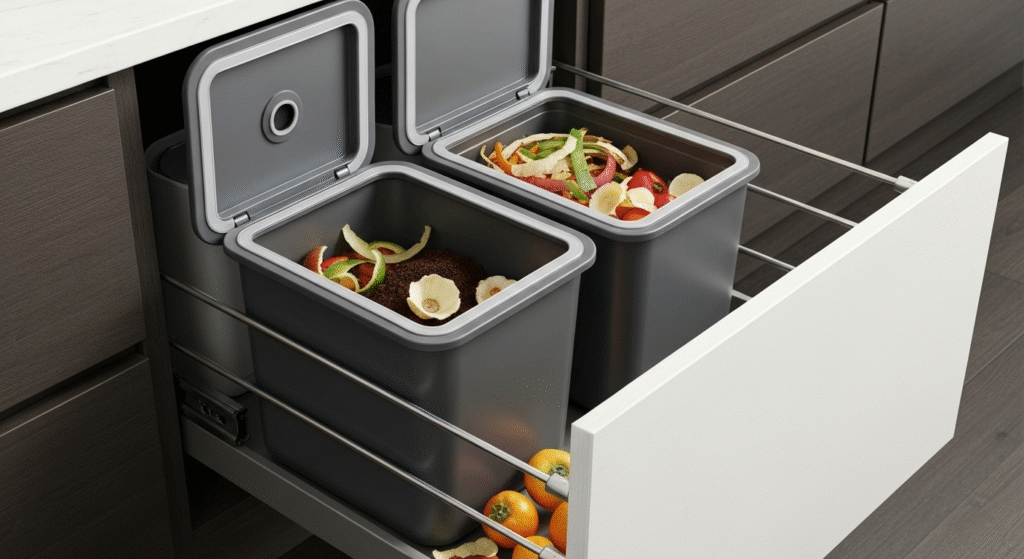
Not all systems are created equal. A successful integrated composting setup depends on the synergy between the drawer mechanism, the type of bin you use, and a smart approach to managing airflow and odors. Let’s break it down.
The Drawer Mechanism: Smooth and Sturdy
The drawer hardware is the backbone of your system. Compost, especially when it contains wet scraps like coffee grounds and fruit peels, can get heavy.
- Weight Capacity is Key: Look for high-quality, full-extension drawer glides. These allow the drawer to pull all the way out, giving you easy access to the bins without having to reach into the cabinet. Ensure the glides are rated to hold at least 75-100 pounds to handle the weight of the bins and their contents.
- Soft-Close for the Win: A soft-close mechanism is a must-have. It prevents the drawer from slamming shut, which can dislodge the bin lids and release odors. It adds a touch of quality and ensures your system remains sealed and quiet. Push-to-open mechanisms are also a great, handle-free option for a minimalist look.
The Bins: Your System’s Core Component
The container that holds the scraps is arguably the most important part. Material, size, and lid design all play a crucial role in the system’s effectiveness.
When choosing your bin, consider how much food waste your household produces. It’s better to have a slightly larger bin that you empty every few days than one that’s constantly overflowing.
| Bin Material | Pros | Cons | Best For |
| Stainless Steel | Highly durable, non-porous (resists odors and stains), easy to sanitize, looks professional. | More expensive, can be heavier. | The homeowner who wants a lifetime, top-tier solution and prioritizes hygiene. |
| BPA-Free Plastic | Lightweight, affordable, often comes with integrated handles and specific lid designs. | Can potentially absorb odors and stains over time, less durable than steel. | Families looking for a functional and budget-friendly option. |
| Recycled Plastic | Eco-friendly choice, lightweight, often designed with composting in mind. | Durability can vary by brand, may be more prone to staining. | The eco-conscious user who wants their system to reflect their values. |
Odor Control: The Science of a Fresh-Smelling Kitchen
This is the number one concern for most people, and it’s where technical details matter most. A great system uses multiple layers of defense against odors.
- The Lid is Your First Defense: Look for bins with tight-fitting lids. Many are designed with a silicone or rubber gasket that creates an airtight seal, trapping odors inside. Some lids are vented and designed to be used with a charcoal filter.
- Charcoal Filters: These are incredibly effective at neutralizing odors. A small, replaceable carbon filter is fitted into the lid, absorbing the organic compounds that cause bad smells before they can escape. For most households, these filters should be replaced every 3-6 months.
- Cabinet Ventilation: While you want the bin itself to be sealed, ensuring there isn’t excessive moisture buildup inside the cabinet is also wise. This is rarely an issue in modern cabinetry, but in older kitchens or humid climates, ensuring the cabinet isn’t perfectly airtight can prevent any potential for musty smells in the surrounding wood.
Putting It All Together: Installation and Retrofitting
Whether you’re planning a new kitchen or upgrading an existing one, integrating a compost drawer is a manageable project. You have two main paths: installing a ready-made system or retrofitting a current cabinet.
Planning Your Installation
Before you buy anything, grab a tape measure.
- Location, Location, Location: The ideal spot is in a pull-out cabinet next to your main sink or primary food preparation zone. This creates an ergonomic “work triangle” for cleanup.
- Measure Everything: You need the interior width, depth, and height of your cabinet. Remember to account for any plumbing or obstructions. Compare these measurements to the specifications of the system you plan to buy.
- Drawer or Cabinet?: You can either dedicate an entire deep drawer to the system or install a pull-out system at the bottom of a standard cabinet, often with a door-mounted frame.
DIY vs. Professional Installation: Making the Right Choice
This decision comes down to your comfort level with tools and the complexity of the system.
| Factor | DIY Installation | Professional Installation |
| Cost | Lower (just the cost of the system). | Higher (system cost + labor). |
| Time | 2-4 hours, depending on skill. | 1-2 hours. |
| Skill Level | Basic carpentry skills (measuring, drilling, using a screwdriver). | None required. |
| Tools Needed | Drill, measuring tape, level, screwdriver. | Professional brings all necessary tools. |
| Outcome | Rewarding, but relies on your precision. | Guaranteed professional fit and function. |
If you are simply placing bins into an existing deep drawer, it’s an easy DIY task. If you are installing a full pull-out mechanism with glides in a base cabinet, it requires more precision. If you’re not confident, hiring a handyperson or cabinet installer is a worthwhile investment to ensure it functions perfectly for years to come.
Keeping Your System Spotless: A Simple Maintenance Routine
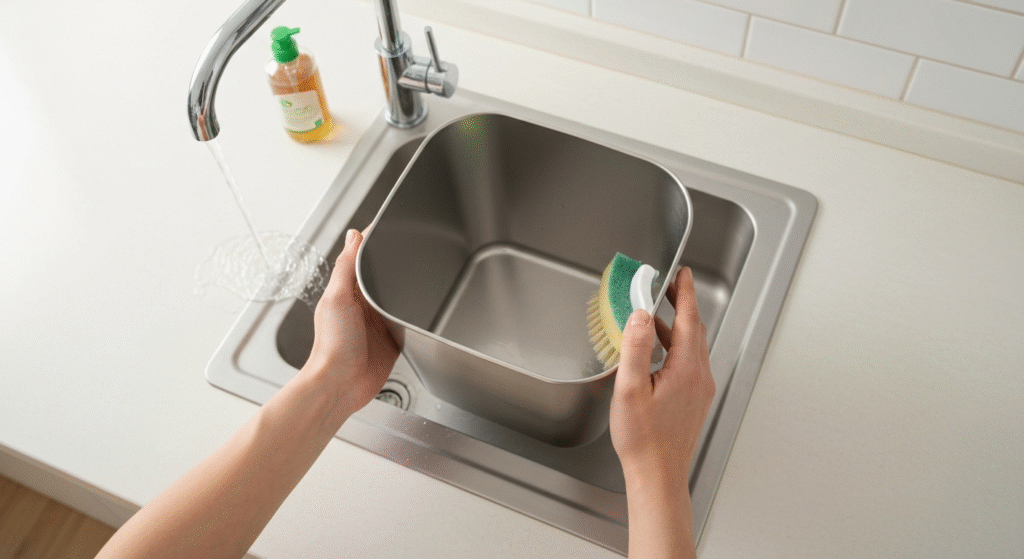
A clean compost system is an odor-free compost system. The beauty of an integrated drawer is that maintenance is simple and contained.
Your Weekly Reset
This should take no more than five minutes.
- Empty the Bin: Take the full bin to your outdoor compost pile or municipal green bin.
- Quick Rinse: Rinse the bin thoroughly with hot water.
- Wash and Dry: Wash it with a bit of dish soap, just like any other dish. For stubborn smells, a quick swirl of white vinegar works wonders.
- Dry Completely: Before returning the bin to the drawer, make sure it’s completely dry to prevent moisture buildup.
The Monthly Deep Clean
Once a month, give the entire system a little extra attention.
- Wipe down the inside of the drawer or the pull-out frame.
- Check your charcoal filter (if you have one) and replace it if it’s no longer effective.
- Wipe down the drawer glides to ensure they remain free of debris and operate smoothly.
Frequently Asked Questions (FAQs)
Will an in-drawer compost system really not make my kitchen smell?
If you choose a system with a high-quality, tight-sealing lid and follow a regular cleaning routine, it should be virtually odor-free. The cabinet provides an extra barrier. Using charcoal filters adds another layer of security for complete peace of mind.
How often do I need to empty the compost bin?
This depends on the size of your bin and your household’s food waste. Generally, most people empty it every 2-4 days. You should empty it before it becomes overly full to prevent odors and make it easy to carry.
Can I install a compost drawer system in an IKEA kitchen?
Absolutely. Many third-party manufacturers design pull-out waste systems that are perfectly compatible with standard IKEA cabinet dimensions. Just be sure to double-check the measurements of both your cabinet and the system before purchasing.
What kind of compostable bags should I use?
Using a BPI-certified compostable bag can make cleanup even easier. These bags are designed to break down in commercial composting facilities. Check if your local municipal program accepts them. If you’re composting at home, you may prefer to go without a bag and simply rinse the bin after each use.
Conclusion: A Step Towards a Smarter, More Sustainable Kitchen
Integrating a compost system into a kitchen drawer is more than just a clever storage hack. It’s a commitment to sustainability that doesn’t force you to compromise on style, space, or cleanliness. By moving your compost off the counter and into a dedicated, sealed, and convenient pull-out system, you streamline your daily routine and maintain the beautiful, functional kitchen you deserve. It’s a simple change that makes a world of difference, turning an everyday chore into an effortless, invisible part of a modern, eco-conscious home.

Hi, I’m Edom Clark, the creator and writer behind Taanzo. For the past five years, I’ve been exploring and writing about kitchen storage and home organization. My experience comes from both personal experimentation and hands-on observation — testing different storage systems, materials, and layouts to find what truly works in everyday homes. Over time, I’ve come to appreciate how small adjustments in storage can transform the way we cook, clean, and even enjoy time in the kitchen. Through Taanzo, I aim to share that knowledge in a way that’s honest, approachable, and genuinely useful.

