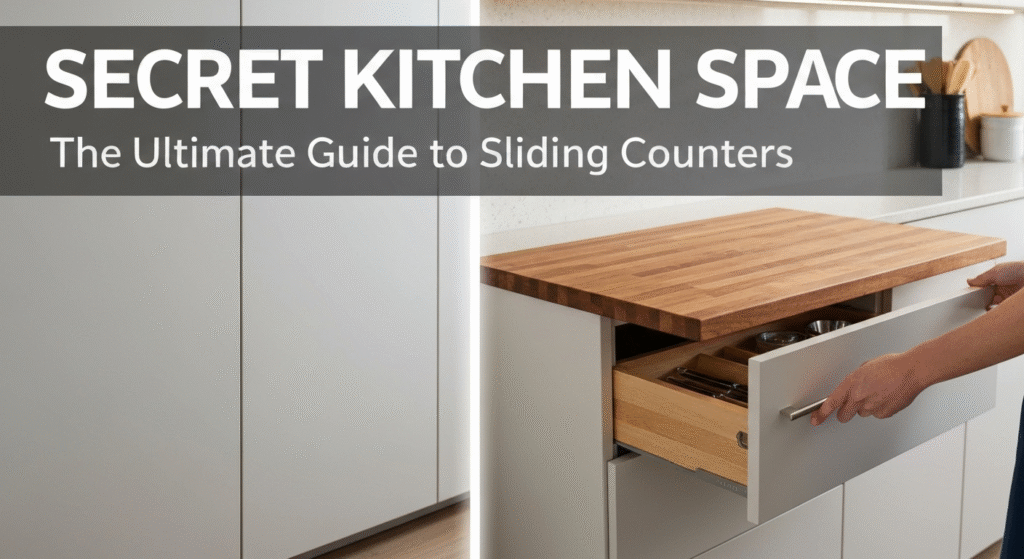
Living with a compact kitchen often feels like a constant puzzle. You’re always trying to find an extra inch of space for chopping vegetables, placing a hot pan, or just setting down your coffee mug. The constant shuffle of appliances and cutting boards can turn cooking from a joy into a chore. What if you could instantly add a stable, useful workspace that appears when you need it and vanishes when you don’t? And what if that same solution also hid your most-used utensils right where you need them? Sliding counter extensions with hidden compartments are that clever solution, and they can completely change the way you use your kitchen.
My name is Edom Clark, and I’ve spent years exploring the ins and outs of smart kitchen storage. My passion isn’t just about finding new products; it’s about understanding the mechanics and design that make a kitchen truly functional. I’ve worked with countless homeowners, particularly those in apartments and homes with small kitchens, to implement clever solutions that maximize every square inch. I’ve seen firsthand how a well-designed pull-out counter can transform a cramped, frustrating space into an efficient and organized cooking environment. This isn’t just theory for me; it’s about the practical application of making a home work better for the people who live in it.
What is a Sliding Counter Extension?
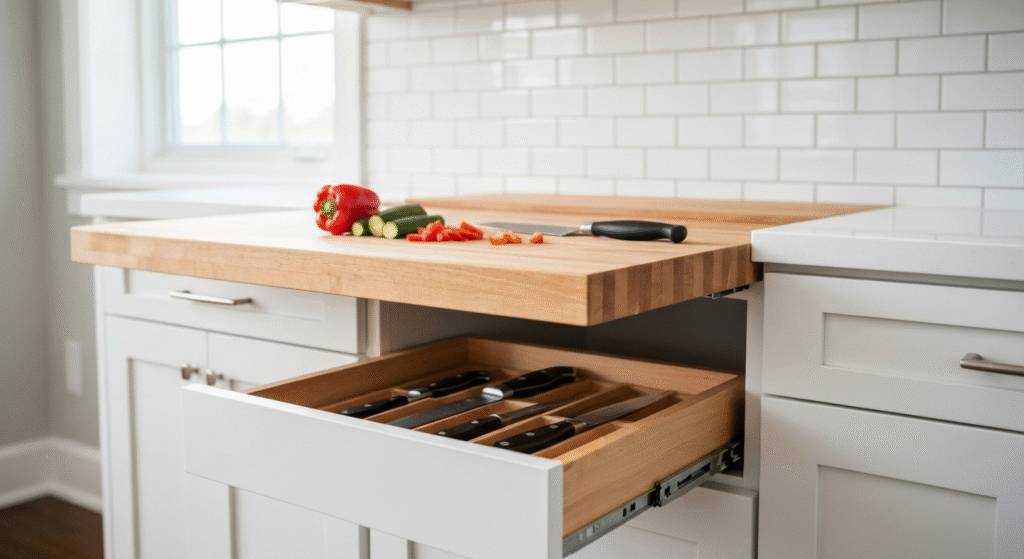
A sliding counter extension is a retractable surface that pulls out from your existing cabinetry, instantly increasing your available workspace. Think of it as a drawer that, instead of holding utensils, is the countertop. These extensions are typically installed in a false drawer front, at the end of an island, or even in the space where an old appliance once lived.
But the real genius comes from its dual purpose. The most innovative designs integrate a shallow, hidden compartment directly beneath the sliding surface. This isn’t just about adding more counter space; it’s about creating an intelligent, self-contained workstation. You can pull out your cutting board, and your chopping knives are already there in the hidden drawer below. Or you can create a pull-out coffee station where the mugs and pods are neatly tucked away underneath. It’s a seamless blend of form and function designed for modern, compact living.
The Mechanics: How They Create a Stable, Usable Surface
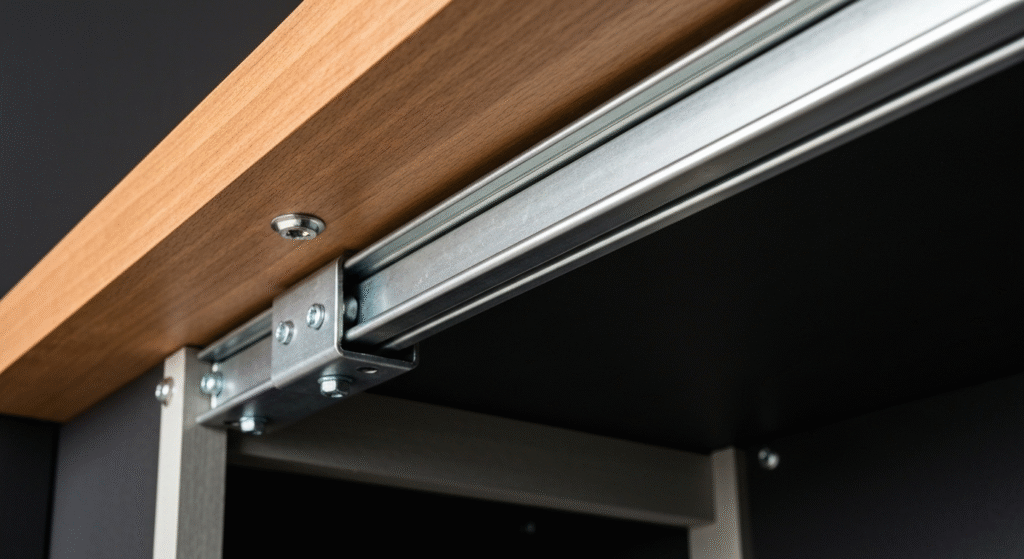
The success of a sliding counter extension hinges entirely on its mechanical components. A wobbly or sagging surface is useless and even dangerous. Having installed and troubleshooted many of these systems, I can tell you that stability comes down to two key factors: the sliding mechanism and the mounting technique.
Choosing the Right Sliding Mechanism
The slides are the heart of the system. They bear the weight, ensure smooth operation, and determine the overall feel and durability of your extension. Choosing the wrong type is a common mistake. I once had a client who installed a beautiful butcher block pull-out using cheap roller slides. It looked great until they tried to knead bread on it. The slides buckled, and the whole unit became unstable. We replaced them with heavy-duty ball-bearing slides, and it became rock solid.
Here’s a breakdown of the common options:
| Slide Type | Load Capacity | Smoothness | Best For | Key Consideration |
| Roller Slides | Low (30-50 lbs) | Basic | Very light-duty use, like a keyboard tray. | Not recommended for countertops where pressure will be applied. Prone to wear and sticking. |
| Ball-Bearing Slides | Medium to High (75-200+ lbs) | Very Smooth | The best all-around choice for most counter extensions. | Look for full-extension models to get the most usable space. Some have soft-close features. |
| Undermount Slides | High (100-150 lbs) | Excellent | High-end installations where you want the hardware completely hidden. | More complex to install and requires precise measurements. Often the most expensive option. |
For 90% of kitchen applications, full-extension ball-bearing slides with a weight rating of at least 100 pounds are the way to go. They offer the perfect balance of strength, smooth operation, and reasonable cost.
Ensuring Rock-Solid Stability with Proper Mounting
Where and how you attach the slides is just as important as the slides themselves. You can’t just screw them into the side of a thin cabinet wall and hope for the best.
- Cabinet-Base Mounting: The most stable method involves building a sturdy box or frame that the slides mount to. This frame is then securely fastened to the bottom and back of the cabinet interior. This distributes the weight across a larger area and prevents the cabinet walls from flexing under load.
- Edge-Mount Techniques: For some applications, like installing a slide between two sturdy cabinet partitions, you can mount the slides directly to the vertical walls. However, this requires the cabinet walls to be at least 3/4-inch thick and structurally sound. For face-frame cabinets, you may need to add wood blocking behind the frame to create a flush mounting surface for the slides.
A Critical Detail: Locking Mechanisms
One feature that is often overlooked is a locking mechanism. For extensions that will be used for heavy tasks like mixing or chopping, slides that lock in the open position are a game-changer. This prevents the counter from sliding back into the cabinet while you’re working. This is also a crucial safety feature in homes with children.
Common Types of Sliding Extensions and Their Uses
These clever systems can be adapted for a wide variety of kitchen tasks. Here are a few of the most popular and practical designs I’ve helped implement.
The Pull-Out Cutting Board with a Knife Drawer
This is the classic and perhaps most useful design. A solid butcher block top pulls out to reveal a shallow, custom-fitted drawer for your most-used chef’s knives, paring knives, and a sharpening steel.
- Why it Works: It creates a dedicated food prep zone. Everything you need is in one place, reducing trips back and forth across the kitchen. It also keeps sharp knives safely stored and off the main counters.
- Pro Tip: When designing the hidden drawer, use a custom wood or cork knife block insert. This prevents the blades from dulling and stops them from sliding around every time you open and close the extension.
The “Disappearing” Coffee Bar
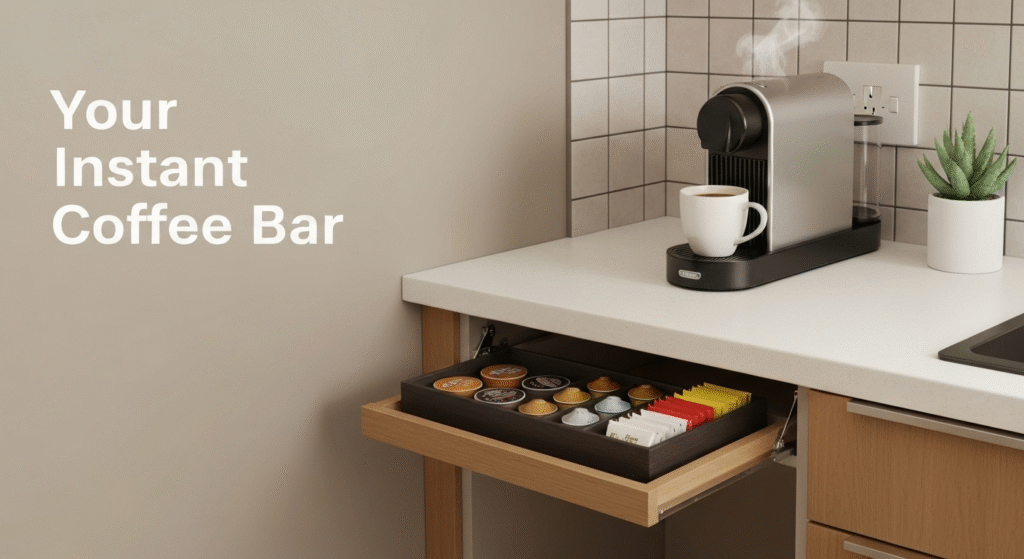
A slightly deeper extension can create a perfect pull-out station for your coffee maker or electric kettle. The hidden compartment below is ideal for storing coffee pods, filters, tea bags, and sugar packets.
- Why it Works: It gets your bulky coffee maker off the main countertop, instantly de-cluttering your kitchen. When you’re done, you just slide it all away.
- Pro Tip: Consider installing a recessed power outlet inside the back of the cabinet. This allows you to keep the appliance plugged in, so it’s ready to go the moment you slide it out.
The End-of-Cabinet Breakfast Bar
If you have an unused panel at the end of a run of cabinets or an island, you can install a sliding extension that creates a small seating area for one or two people.
- Why it Works: It provides a quick and easy spot for a morning coffee or a casual meal without taking up permanent floor space like a traditional table.
- Pro Tip: Ensure the extension is mounted at a comfortable table height (around 30 inches) rather than counter height (36 inches) if it’s intended for seating. Use heavy-duty slides and consider a fold-down leg at the end for extra support.
Is a Sliding Counter Extension Right for Your Kitchen?
While these extensions are incredibly useful, they aren’t the perfect solution for every kitchen. It’s important to weigh the benefits against the potential drawbacks before you commit to a project.
| Pros | Cons |
| Maximizes Usable Space: The most obvious benefit. It adds valuable workspace exactly where you need it. | Installation Complexity: This is not a beginner-level project. It requires precise measurements and basic carpentry skills. |
| Reduces Clutter: By integrating storage, it helps keep your main countertops clear and organized. | Cost: High-quality slides and materials can be more expensive than a simple freestanding kitchen cart. |
| Improves Workflow: Creates dedicated task stations (e.g., for food prep, coffee) that make cooking more efficient. | Potential for Instability: If not installed with the right hardware and techniques, the surface can be wobbly. |
| Modern Aesthetic: A well-integrated pull-out counter provides a clean, custom look that enhances your kitchen’s design. | Loss of Cabinet Space: You are sacrificing a drawer or a portion of a cabinet to house the mechanism. |
The ideal candidate for a sliding counter is someone who is short on continuous counter space and is willing to trade a bit of cabinet storage for a more functional and organized workspace.
Frequently Asked Questions (FAQs)
What is the best material for a sliding countertop?
Solid hardwood, especially butcher block, is the best choice. It’s durable, food-safe (when properly sealed), and can handle chopping directly on its surface. For lighter-duty applications like a coffee bar, a high-quality laminate or even a piece of sealed plywood can work well. I would avoid heavy materials like stone or quartz unless you are using an industrial-grade sliding system with support legs.
How much weight can a sliding counter hold?
This depends entirely on the slides you choose. Standard heavy-duty ball-bearing slides are typically rated for 100 to 150 pounds. This is more than enough for chopping, mixing, and placing small appliances. Always check the manufacturer’s specifications for the slides you purchase.
Can I install a sliding counter myself?
If you are comfortable with woodworking projects that require precise measurements, cutting, and assembly, then this is a manageable DIY project. However, if you are not experienced, it may be best to hire a professional carpenter or handyperson to ensure it is installed safely and correctly. An unstable installation can be frustrating and even dangerous.
Does a pull-out counter need a locking mechanism?
For any surface where you will be applying significant downward pressure—like kneading dough, using a rolling pin, or heavy chopping—a locking mechanism is highly recommended. It prevents the counter from retracting unexpectedly while you work. For a simple pull-out shelf for a coffee maker, it’s less critical but still a nice feature to have.
Conclusion: A Small Change for a Big Impact
In a small kitchen, every design choice matters. Wasted space is a luxury you can’t afford. A sliding counter extension with a hidden compartment is more than just a clever gadget; it’s a fundamental shift in how you use your kitchen. It turns a static, inefficient layout into a dynamic, multi-functional workspace. By understanding the simple mechanics behind these systems—choosing the right slides and ensuring a stable installation—you can add a feature to your kitchen that not only solves the problem of limited counter space but also brings a new level of organization and efficiency to your daily cooking routine. It’s a smart investment in making the heart of your home work better for you.

Hi, I’m Edom Clark, the creator and writer behind Taanzo. For the past five years, I’ve been exploring and writing about kitchen storage and home organization. My experience comes from both personal experimentation and hands-on observation — testing different storage systems, materials, and layouts to find what truly works in everyday homes. Over time, I’ve come to appreciate how small adjustments in storage can transform the way we cook, clean, and even enjoy time in the kitchen. Through Taanzo, I aim to share that knowledge in a way that’s honest, approachable, and genuinely useful.

