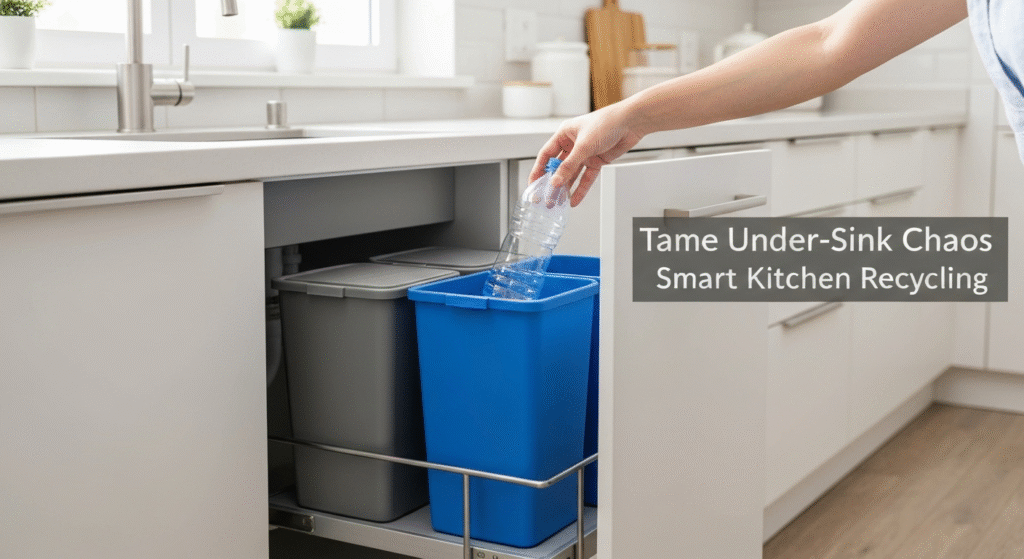
Is the cabinet under your kitchen sink a dreaded zone? For many, it’s a dark, cluttered space where a single, overflowing trash can lives next to a jumble of cleaning supplies and plastic bags. Trying to sort recyclables in this environment often means a messy pile on the counter or a separate, clunky bin taking up valuable floor space. It’s an inefficient system that makes an eco-friendly habit feel like a chore.
The good news is there’s a smarter, more streamlined solution. Modular recycling stations designed for under-sink cabinets transform this awkward space into a powerhouse of organization. These systems introduce dedicated compartments for trash, recycling, and compost, all neatly tucked away. They make sorting effortless, control odors, and reclaim your kitchen from clutter.
My name is Edom Clark, and for the last five years, I’ve focused on helping people find practical and clever kitchen storage solutions. My work involves looking past the clutter to see the potential in every cabinet and drawer. I’ve seen firsthand how a well-designed system can completely change the flow and feel of a kitchen. An organized under-sink area isn’t just about hiding trash; it’s about creating an efficient workflow that makes daily tasks, like recycling, simple and second nature.
This guide is built on that experience. We’ll break down exactly how these modular systems work, what types are available, and what features truly matter. Let’s explore how you can turn that chaotic cabinet into a model of clean, green efficiency.
Why a System Beats a Standalone Bin
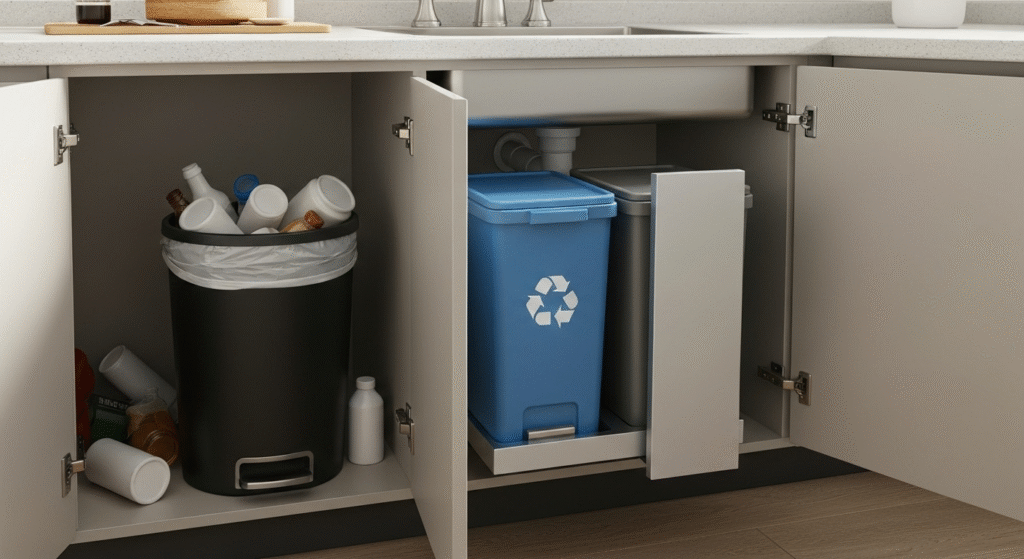
Simply tossing a recycling bin under the sink is a start, but it rarely solves the core problems of space and convenience. A dedicated modular system offers distinct advantages that a loose bin can’t match. It’s about creating a purpose-built station rather than just a storage spot.
Maximizing Every Inch of Awkward Space
The area under a sink is notoriously difficult to organize. With plumbing pipes, a garbage disposal, and an odd shape, it’s a challenge to use effectively. Standalone bins often leave unused gaps. Modular systems, especially pull-out models, are engineered to fit around these obstacles. They use custom-fit frames that turn that entire cabinet cavity into functional, accessible storage. In my experience, this is the single biggest win for most homeowners—they are often shocked by how much usable space was hiding in plain sight.
Ergonomics: Saving Your Back
Bending down and reaching into the back of a deep cabinet to toss a bottle or find the right bin is awkward and uncomfortable. A pull-out recycling station changes this completely. The bins glide out to meet you on smooth tracks, giving you full access without straining. This is especially helpful for people with mobility issues or anyone who is tired of the daily gymnastics required to throw something away. It’s a small change in mechanics that makes a huge difference in daily comfort.
Odor Control: Trapping Smells at the Source
Loose bins with ill-fitting lids do little to contain odors from food waste or unrinsed containers. Modular systems are designed with this in mind. Many come with snug-fitting lids that create a seal, trapping smells inside. Some premium models even include charcoal filters in the lids, actively neutralizing odors before they can escape into your kitchen. This is a game-changer for anyone who includes a compost caddy in their setup.
Streamlining Your Recycling Routine
The easier it is to do something, the more likely you are to do it. By providing separate, clearly defined bins for different types of waste—trash, glass, plastic, paper, compost—a modular system removes the guesswork. This clarity helps build a consistent habit for everyone in the household. A client once told me that installing a color-coded system was the final step that got her kids to finally start sorting recyclables correctly without being asked.
Decoding the Types of Modular Recycling Stations
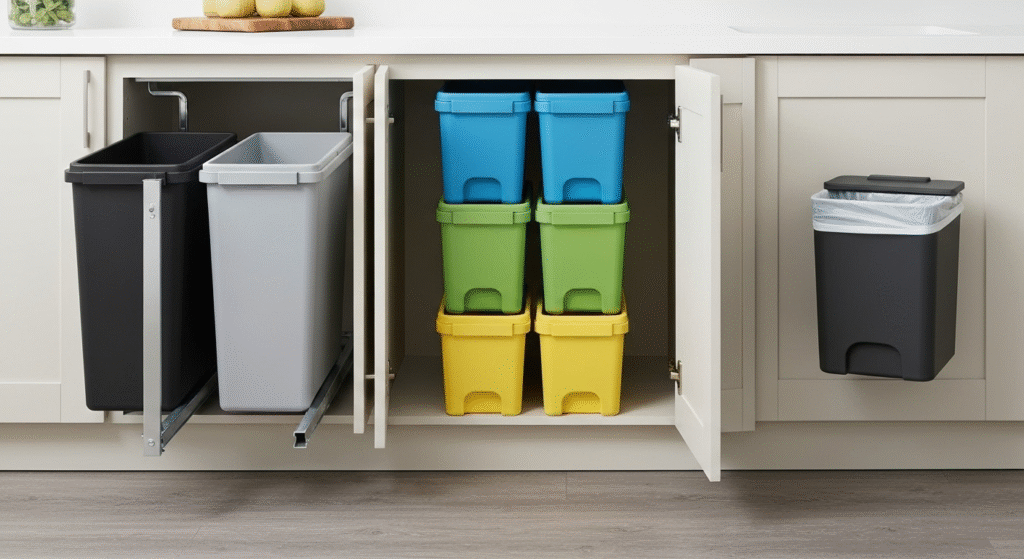
Not all under-sink systems are created equal. They generally fall into three main categories, each with its own benefits depending on your kitchen layout, your budget, and whether you own or rent your home.
Pull-Out Systems (On Rails)
These are the most integrated and popular option. The bins sit within a sturdy frame that is mounted to the floor of your cabinet. The entire unit slides out smoothly on ball-bearing tracks, providing easy access to all compartments.
- Pros:
- Extremely stable and durable.
- Uses space very efficiently.
- Keeps bins perfectly aligned and hidden.
- Feels like a high-end, custom feature.
- Cons:
- Requires installation (usually a simple DIY project).
- Higher initial cost compared to other types.
- Less flexible if you decide to rearrange later.
Best for: Homeowners who want a permanent, seamless solution that maximizes space and convenience.
Freestanding Modular Bins
This category includes individual bins that are designed to be placed directly into the cabinet. They are often shaped to fit together or stack, allowing you to create your own custom configuration without any installation.
- Pros:
- No installation required—just place and use.
- Highly flexible; you can add, remove, or rearrange bins as needed.
- Generally more affordable.
- Perfect for renters who can’t make permanent changes.
- Cons:
- Can slide around inside the cabinet if not fitted snugly.
- May not use the available space as perfectly as a pull-out system.
- You have to reach into the cabinet to access them.
Best for: Renters, people on a tighter budget, or anyone who values flexibility over a built-in feel.
Door-Mounted Systems
These systems attach directly to the inside of the cabinet door. They typically consist of a frame that holds a small bin, which swings out when you open the door. Some models have a lid that opens automatically as the door opens.
- Pros:
- Makes excellent use of otherwise wasted door space.
- Very convenient for quick access to a compost or small trash bin.
- Frees up the cabinet floor for other storage.
- Cons:
- Limited size and weight capacity.
- Can put stress on cabinet door hinges over time.
- Not suitable for heavy recyclables like glass.
Best for: A small compost pail or a secondary, small trash bin for items like dryer lint or food scraps.
| System Type | Installation | Best For | Average Cost | Flexibility |
| Pull-Out (On Rails) | Required (DIY) | Homeowners, seamless integration | $$-$$$ | Low |
| Freestanding Bins | None | Renters, budget-conscious users | $ – $$ | High |
| Door-Mounted | Required (DIY) | Compost, small trash caddy | $ | Medium |
Key Features to Demand in Your System
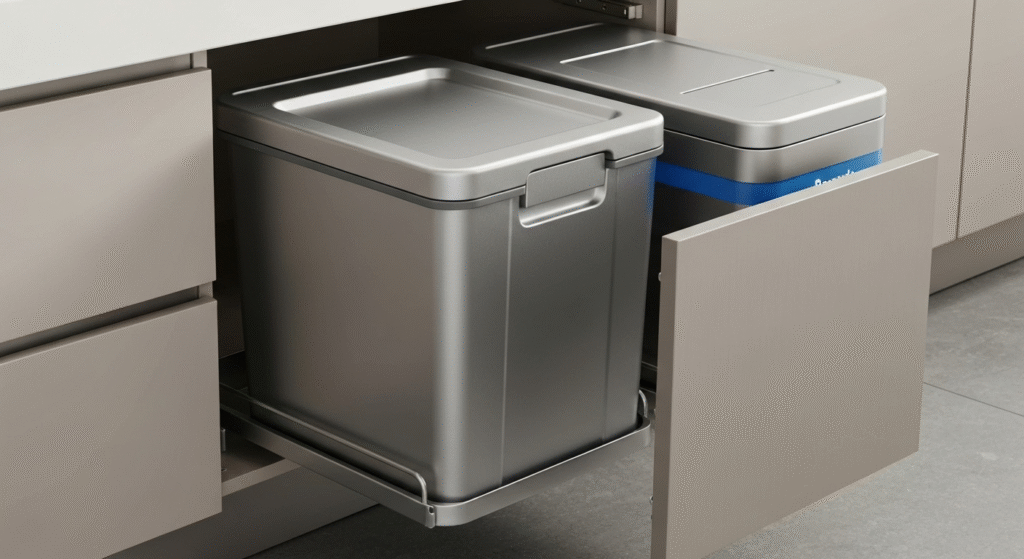
Once you’ve decided on a type, the next step is to look at the specific features that separate a great system from a frustrating one. After helping dozens of clients navigate these choices, I’ve found that the following details make the biggest impact.
Modularity and Configuration
The “modular” aspect is key. Look for systems that offer different bin sizes within the same frame. This allows you to allocate more space to what you produce most, whether it’s mixed recycling or general waste. Before you buy anything, measure your cabinet interior carefully. Note the width, depth, and height, but most importantly, map out where your plumbing and garbage disposal are. I always advise clients to take a photo and draw the pipe locations on it with dimensions. This prevents the common mistake of buying a system that won’t fit around the P-trap.
Material Matters: Plastic vs. Stainless Steel
The bins themselves are typically made from either high-grade plastic or stainless steel. Each has its advantages.
| Feature | Plastic Bins | Stainless Steel Bins |
| Durability | High-impact plastic is very durable and won’t dent. | Resists scratches and won’t absorb odors. Can dent. |
| Cleaning | Very easy to wipe down or rinse out. | Naturally antimicrobial and very easy to clean. |
| Cost | More affordable. | More expensive. |
| Odor Resistance | Good, but can potentially absorb strong odors over time. | Excellent; non-porous surface does not trap odors. |
For most people, a quality polymer or ABS plastic is perfectly sufficient and cost-effective. However, if you are particularly sensitive to odors or want a premium feel, stainless steel is an excellent choice.
The Importance of Lids and Odor Control
A lid is non-negotiable for any bin containing food waste. Look for systems with well-designed lids. Soft-close features are a nice touch, preventing slamming noises. For ultimate odor control, some systems offer lids with integrated carbon or charcoal filters, which need to be replaced every few months. These are highly effective for compost bins. Even a simple, tightly-fitting lid makes a world of difference compared to an open-top can.
Color-Cues and Labels for Effortless Sorting
Visual cues are incredibly powerful for building habits. Many modular systems come with color-coded rims or handles (e.g., blue for recycling, green for compost, black for trash). This simple feature makes it easy for everyone in the family to sort waste correctly at a glance, without having to stop and think. If the system you choose doesn’t have them, it’s easy to add your own colored tape or labels.
A Quick Guide to Installation and Setup
Setting up your new system correctly is the final step to under-sink harmony. While freestanding bins need no setup, pull-out and door-mounted systems require a bit of DIY work.
- Empty and Clean: Start by completely emptying and cleaning the cabinet. This is the perfect time to wipe down all surfaces.
- Measure and Mark: Carefully read the manufacturer’s instructions. They will specify where to place the base of the pull-out frame. Measure from the front, back, and sides of the cabinet and mark your drill holes with a pencil. Double-check that the frame will not interfere with pipes or door hinges when it slides.
- Secure the Frame: Drill pilot holes on your marks and then secure the sliding frame to the cabinet floor using the provided screws. Ensure it is level and stable.
- Attach the Bins: Place the waste bins into the frame. Test the sliding mechanism to make sure it moves smoothly without catching on anything.
- Organize for Efficiency: Arrange your bins based on usage. I typically recommend placing the most frequently used bin (often mixed recycling or trash) in the most accessible position, usually at the front.
Keeping Your Recycling Station Fresh and Clean
A great system deserves proper maintenance to keep it hygienic and odor-free.
- Regular Rinsing: Wipe down the bins weekly with a damp cloth and a mild detergent. For any spills or sticky residue, take the bins out and give them a thorough rinse.
- Use Quality Liners: Use properly sized liners to prevent leaks and make emptying the bins easier. For compost, consider using compostable bags.
- The Baking Soda Trick: In my years of working with kitchen setups, one of the simplest and most effective tricks is to sprinkle a tablespoon of baking soda in the bottom of the bin before putting in a new bag. It’s a natural and cheap deodorizer that absorbs moisture and neutralizes acidic odors.
Frequently Asked Questions (FAQ)
How do I choose a system that fits around my sink plumbing and garbage disposal?
The key is precise measurement. Measure the clear floor space you have available, avoiding the area directly under the pipes and disposal. Many manufacturers provide detailed dimension diagrams. Look for “half-depth” models or systems with smaller bins that can be configured to fit in tight spaces.
Can I install a pull-out system if I’m a renter?
While you should always check with your landlord, most pull-out systems are secured with just a few small screws into the cabinet floor. This is usually considered a minor, reversible modification that is easy to patch when you move out. Freestanding modular bins are a completely installation-free alternative.
Are the bins difficult to remove for cleaning?
No, quite the opposite. Most systems are designed for the bins to be lifted straight out of the frame effortlessly. This makes it simple to carry them out for emptying or to the sink for a quick wash.
What is the best way to control smells from a compost bin?
Beyond using a bin with a tight lid, the most important step is to empty it frequently (every 1-2 days). You can also layer your food scraps. Alternate “green” materials (like fruit and vegetable peels) with “brown” materials (like paper towels or coffee grounds) to balance moisture and reduce odor.
Conclusion
Reclaiming the cabinet under your sink is more than just an organizing project; it’s about making an everyday task simpler, cleaner, and more efficient. A modular recycling station replaces chaos with order, turning a neglected space into a functional hub for managing your household waste. By choosing a system that fits your space and habits, you can eliminate counter clutter, control odors, and make your recycling efforts a seamless part of your kitchen routine. It’s a smart, practical upgrade that contributes to a more organized and eco-conscious home.

Hi, I’m Edom Clark, the creator and writer behind Taanzo. For the past five years, I’ve been exploring and writing about kitchen storage and home organization. My experience comes from both personal experimentation and hands-on observation — testing different storage systems, materials, and layouts to find what truly works in everyday homes. Over time, I’ve come to appreciate how small adjustments in storage can transform the way we cook, clean, and even enjoy time in the kitchen. Through Taanzo, I aim to share that knowledge in a way that’s honest, approachable, and genuinely useful.

