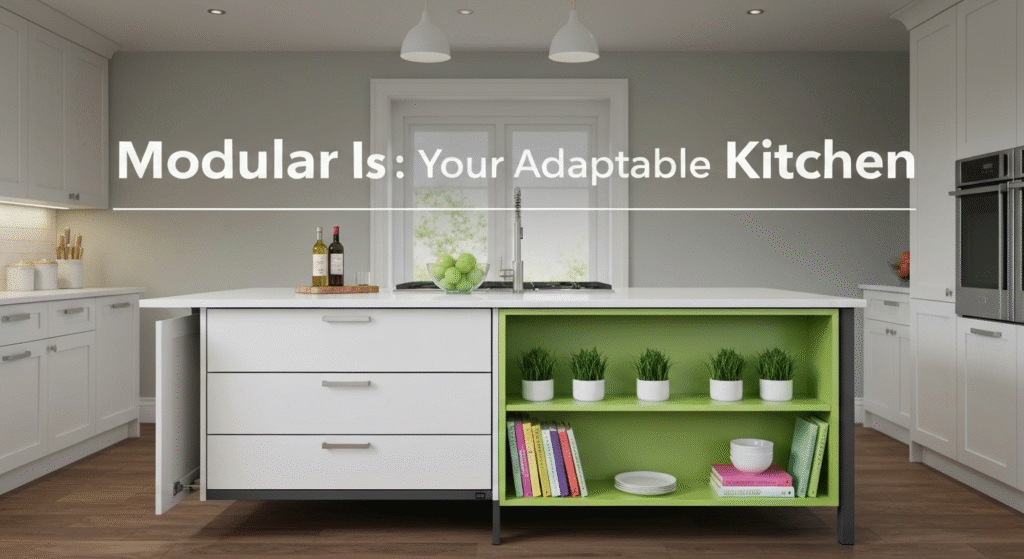
Modular island storage is one of the most exciting frontiers in kitchen design, moving us away from static, one-size-fits-all solutions. Imagine a kitchen island that changes with the seasons, adapting to your life as effortlessly as you switch from a winter coat to a summer shirt. This isn’t a far-off concept; it’s a practical, innovative approach that puts you in complete control of your kitchen’s most valuable real estate. Instead of committing to a fixed set of drawers and cabinets for the next twenty years, a modular island allows you to swap components in and out, ensuring your workspace always matches your current needs. It’s about creating a kitchen that truly works for you, not the other way around.
My name is Edom Clark, and for the past five years, I’ve been completely immersed in the world of kitchen storage. My journey began not just with an interest in design, but with a deep curiosity about how people really use their spaces day-to-day. I’ve spent countless hours exploring how thoughtful organization can reduce stress and make cooking a joy rather than a chore. This passion led me to focus on adaptable solutions, and modular islands quickly became my specialty. I believe a great kitchen isn’t just about how it looks, but how it feels and functions—how it fluidly adapts to the rhythm of your life.
What Exactly is a Modular Kitchen Island?
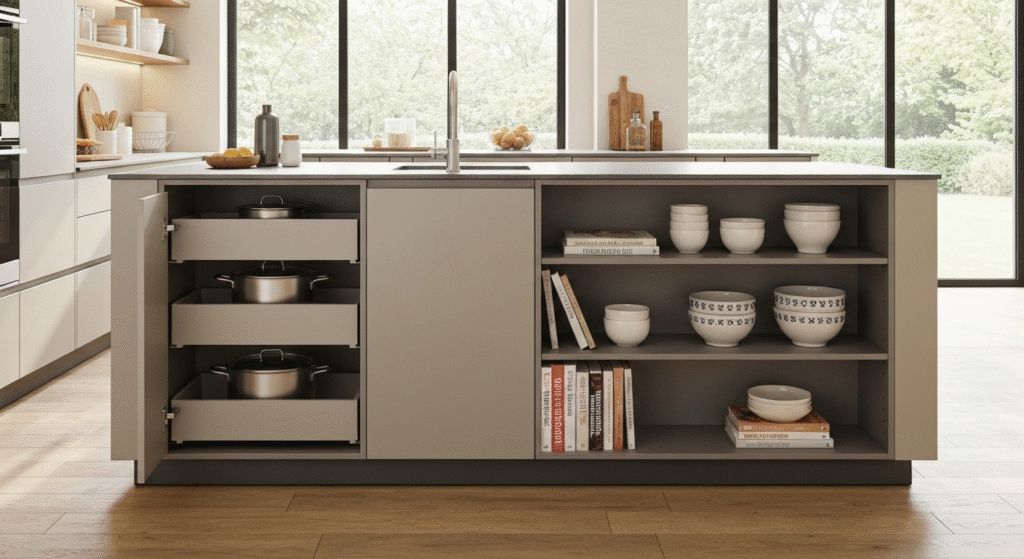
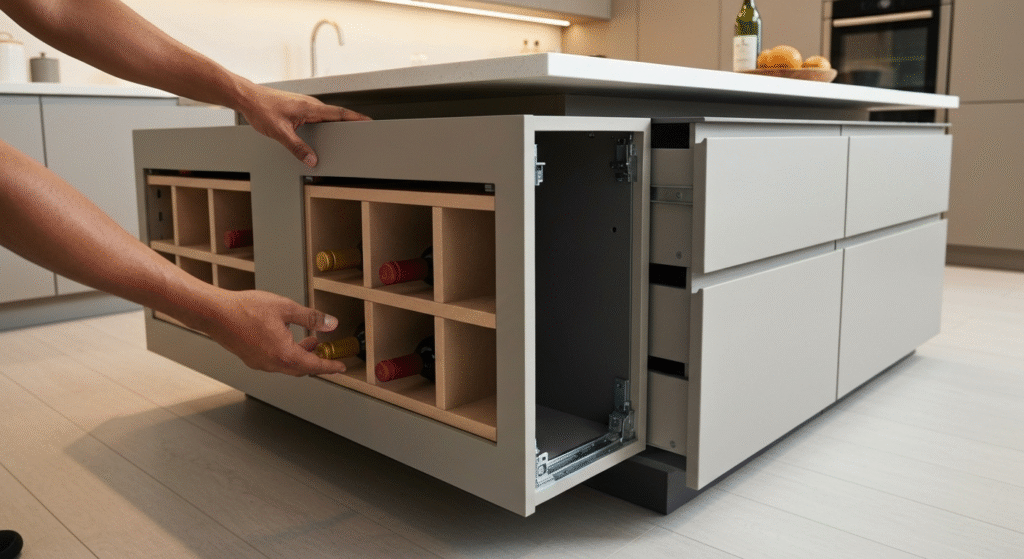
At its core, a modular kitchen island is a central workspace built with interchangeable components. Think of the island’s main body as a sturdy frame or a “docking station.” This frame has standardized slots or bays designed to hold various “modules”—be it a set of deep drawers, a wine rack, open shelving, or even a pull-out spice cabinet. You aren’t locked into one configuration. When your needs change, you simply unlock a module, slide it out, and replace it with another one.
The real magic is in its ability to transform. That section holding your bulky stand mixer and baking supplies for the holidays can become a station for marinating tools and skewers during summer grilling season. It’s the ultimate expression of a flexible kitchen, built around the idea that our lives—and our cooking habits—are anything but static.
The Core Idea: Adapting to Your Life
The fundamental principle behind modular island storage is adaptation. A traditional kitchen is designed with a general set of assumptions about how you’ll use it. A modular kitchen assumes nothing. It understands that you might be an avid baker in December, a home canner in August, and a casual weekday cook the rest of the year.
For example, a family with young children might initially prioritize modules with concealed latches for safety. As the kids grow into teenagers, those same slots could be fitted with open shelving to create a self-serve snack and breakfast station. This ability to evolve is what truly sets modular design apart, making it an investment that pays dividends for years to come.
The Game-Changing Benefits of Swappable Components
Opting for a modular island with swappable components is more than just a trendy design choice; it’s a practical decision that fundamentally improves how your kitchen functions. Let’s break down the key advantages that make this system so compelling.
Ultimate Flexibility for Every Season
Your cooking style likely changes throughout the year. A modular island can change right along with you.
- Winter Baking: Swap in modules with deep drawers for flour bins, mixing bowls, and your heavy-duty stand mixer.
- Summer Preserving: Replace them with open shelving for easy access to canning jars, large stockpots, and fresh produce.
- Entertaining: A standard drawer module can be temporarily replaced with a wine rack or a beverage station for parties.
This level of customization ensures that the tools you need right now are always front and center, minimizing clutter and maximizing efficiency.
Future-Proofing Your Kitchen Design
Life is unpredictable. Your family grows, your hobbies change, and your needs evolve. A modular island is a kitchen’s best defense against obsolescence. It can adapt to major life stages without requiring a costly renovation. The island you build today can serve the needs of a young couple, a growing family, and empty nesters with just a few simple module swaps. It’s a design that’s built for the long haul.
Enhanced Organization and Efficiency
Efficiency in the kitchen comes from having a logical workflow. A modular island allows you to fine-tune that workflow on the fly. You can group modules by task. For instance, create a “baking zone” by clustering your flour, sugar, and mixing tool modules together. For meal prep, you can swap in a module that includes a built-in cutting board and a compost bin. This task-based organization saves steps and makes the entire cooking process smoother and more intuitive.
Easier Cleaning and Maintenance
Cleaning a packed, cluttered cabinet is a dreaded task. With a modular system, maintenance becomes incredibly simple. Instead of reaching into the dark corners of a fixed cabinet, you can slide the entire module out. This gives you full access to clean the module itself and the inside of the island frame. Spills and crumbs have nowhere to hide, making it easier to maintain a hygienic kitchen environment.
| Feature | Traditional Fixed Island | Modular Swappable Island |
| Adaptability | Static and permanent. What you build is what you get. | Highly flexible. Can be reconfigured for seasons, hobbies, or life changes. |
| Organization | General-purpose. Often requires secondary organizers. | Task-specific. Modules can be designed for baking, prep, storage, etc. |
| Longevity | May become outdated as family needs change over time. | “Future-proof.” Adapts to different life stages without renovation. |
| Maintenance | Difficult to deep clean interior cabinets and corners. | Easy. Modules can be fully removed for thorough cleaning. |
| Customization | Limited to the initial design and installation. | Nearly limitless. New modules can be added or swapped at any time. |
Designing Your Perfect Modular Island: Key Considerations
Building a modular island is an exciting process, but it requires careful planning to ensure it’s both beautiful and functional. The success of the system hinges on the quality of its core components and a clear understanding of how you intend to use it.
The Foundation: The Frame and Docking System
The frame is the backbone of your modular island. It must be strong, stable, and precisely engineered to accept the various modules without any wobble or misalignment. This is where you should not cut corners. Solid hardwood or welded steel frames are excellent choices for their durability and ability to bear significant weight.
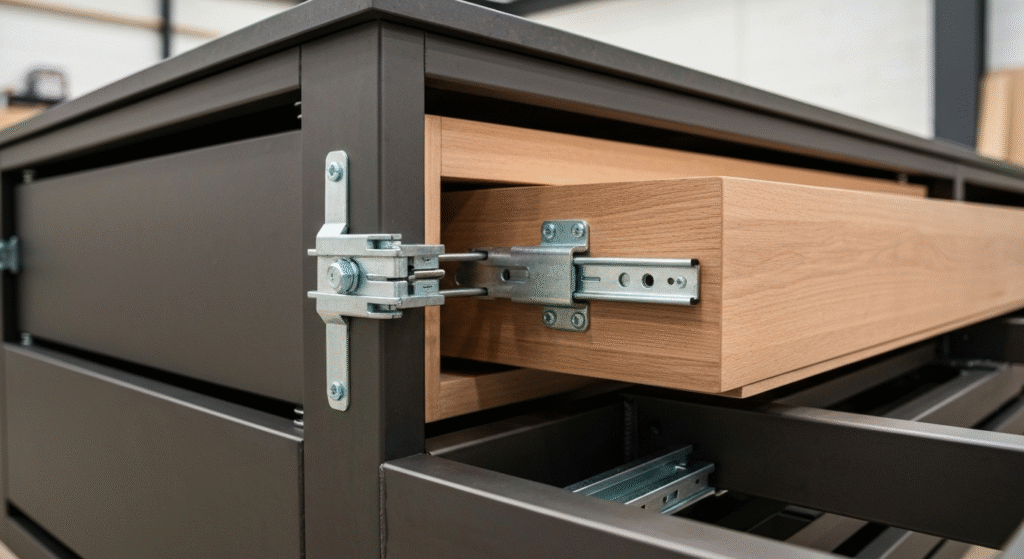
The docking or locking mechanism is equally critical. This is what holds each module securely in place. Systems can range from:
- Slide-and-Lock Rails: These are often the most secure. The module glides in on heavy-duty drawer slides and clicks into place with a pin or latch.
- Magnetic Catches: High-strength magnets can provide a firm hold for lighter modules, offering a clean, hardware-free look.
- Pressure Fittings: Some systems rely on a very precise, snug fit to hold modules in place. These are best for components that won’t be swapped frequently.
I recently worked with a client who was a passionate baker in the winter but an avid griller and entertainer in the summer. Her baking modules needed to support a heavy marble slab and cast-iron pans. For her, a simple pressure-fit system was out of the question. We designed a robust steel frame with a slide-and-lock rail system. This ensured her heavy baking modules were completely stable, but she could still easily swap them for a lighter-weight beverage fridge and BBQ tool drawer module come June. It’s this attention to mechanical detail that transforms a clever idea into a reliable, long-lasting kitchen feature.
Choosing Your Modules: A World of Possibilities
This is the fun part. The types of modules you can incorporate are limited only by your imagination. Think about all the tasks you perform in your kitchen and design modules that cater to them. Popular options include:
- Deep Drawer Modules: Perfect for storing pots, pans, and small appliances.
- Shallow Drawer Modules: Ideal for utensils, cutlery, and linens, often with built-in dividers.
- Open Shelving Modules: Great for cookbooks, frequently used bowls, or decorative items.
- Specialized Modules: This is where you can get creative. Consider modules for:
- Vertical tray and cutting board storage.
- Pull-out spice racks.
- Integrated knife blocks.
- Wine or bottle cubbies.
- Concealed trash and recycling bins.
Material and Aesthetics: Matching Your Style
A modular island doesn’t have to look industrial or pieced together. When planned correctly, it can blend seamlessly into any kitchen style, from modern farmhouse to sleek minimalist. The key is to maintain a consistent aesthetic with the frame and the faces of the modules.
- Frame Materials: As mentioned, wood and steel are top choices. The frame can be left exposed for an industrial look or concealed with panels that match your other cabinetry.
- Module Materials: The modules themselves can be crafted from wood, plywood, metal, or even high-quality composites. The drawer and door fronts should match the style of your main kitchen cabinets to create a cohesive design.
Mechanical Stability and Durability: The Non-Negotiables
The promise of flexibility is exciting, but it means nothing if the island feels flimsy or unstable. The mechanical integrity of a modular island is paramount, ensuring it can withstand the rigors of daily kitchen life, from vigorous chopping to leaning against it with a cup of coffee.
Ensuring a Wobble-Free Experience
A stable modular island starts with a well-constructed frame and a level floor. But the magic truly lies in the connection between the frame and the module. A high-quality system will have incredibly tight tolerances, meaning there is very little “play” or wiggle room once a module is docked. Look for systems where the modules don’t just sit in a cavity but are actively secured to the frame. This ensures that opening a heavy drawer doesn’t cause the entire module to shift. Proper weight distribution is also key; a good design will handle a heavy module filled with cast iron just as securely as a light one filled with tea towels.
The Role of High-Quality Hardware
The unseen hardware—the slides, latches, and locks—is the heart of the system. This is where investing in quality pays off. Heavy-duty, full-extension ball-bearing slides are a must for any drawer module, allowing for smooth operation and easy access to the entire drawer. For locking mechanisms, durability is key. A mechanism that feels crisp and secure after the 100th swap is a sign of good engineering. Avoid systems that rely on plastic components for critical locking parts, as these can wear out or become brittle over time.
| Mechanism Type | Pros | Cons | Best For |
| Rail and Pin/Latch Lock | Extremely secure and stable; ideal for heavy loads. | Can be more complex to install; visible hardware may not suit all styles. | Drawer modules, appliance lifts, or any heavy-duty application. |
| High-Strength Magnets | Clean, hidden look; easy to swap modules quickly. | Less secure for very heavy or dynamic loads (like a trash pull-out). | Lighter-weight applications like open shelving, spice racks, or wine cubbies. |
| Friction/Pressure Fit | Simplest design with no moving parts. | Can loosen over time; not suitable for heavy items or frequent swapping. | Decorative panels or modules that will be left in place for long periods. |
Is a Modular Island Right for Your Kitchen?
While a modular island offers incredible benefits, it’s worth considering if it’s the best fit for your specific lifestyle and space.
Who Benefits Most?
- The Multi-Passionate Cook: If your hobbies shift with the seasons (baking, canning, grilling, cocktail making), a modular island is your perfect partner.
- Growing Families: The ability to adapt the island’s function as your children grow is invaluable. It can transition from a craft station to a homework hub to a party buffet.
- Design Enthusiasts: For those who love to refresh their space, the ability to change the look and function of the kitchen’s centerpiece is a major plus.
- Small Space Dwellers: In compact kitchens, every square inch counts. A modular island ensures that the most prominent feature is also the most versatile.
Potential Downsides to Consider
- Initial Cost: The custom engineering and high-quality hardware required can make a modular island more expensive upfront than a standard, off-the-shelf option.
- Storage for Unused Modules: You need a designated space—like a pantry, garage, or basement—to store the modules that are currently “off-duty.”
- Complexity: There are more moving parts than in a traditional island, which means there’s a greater need for quality craftsmanship to ensure long-term durability.
Frequently Asked Questions (FAQs)
How much does a modular kitchen island cost compared to a traditional one?
Generally, a custom modular island can cost 20-50% more than a comparable fixed island. The price increase is due to the precision engineering, specialized hardware (locking mechanisms, heavy-duty slides), and the labor required to create the interchangeable system.
Do I need a professional to install a modular island?
It is highly recommended. The stability of the entire system depends on the frame being perfectly level and securely installed. A professional cabinet maker or kitchen installer will have the tools and expertise to ensure the frame is sound and the modules fit and function perfectly.
Where do I store the modules I’m not currently using?
This is a key logistical consideration. The best places are a walk-in pantry, a nearby utility closet, or a designated shelf system in a clean garage or basement. It’s wise to plan this storage space as part of your overall kitchen design.
Are modular islands structurally sound enough to handle heavy items like stone countertops?
Absolutely, provided the frame is properly designed and constructed. A robust frame made from steel or solid hardwood can easily support heavy countertops like granite or quartz. The countertop rests on the permanent frame, not on the swappable modules themselves.
Conclusion: Your Kitchen, Your Rules
A kitchen should be a reflection of the people who use it—dynamic, personal, and full of life. For too long, we’ve accepted that our kitchens are static structures that we must adapt to. Modular island storage flips that script entirely. It introduces a new level of freedom and personalization, allowing you to create a workspace that evolves with you.
By investing in a system that values flexibility and smart design, you are not just building a kitchen for today; you are building a kitchen for all the different versions of yourself for years to come. It’s a smarter, more responsive approach to the heart of the home, finally giving you a space that operates on your terms.

Hi, I’m Edom Clark, the creator and writer behind Taanzo. For the past five years, I’ve been exploring and writing about kitchen storage and home organization. My experience comes from both personal experimentation and hands-on observation — testing different storage systems, materials, and layouts to find what truly works in everyday homes. Over time, I’ve come to appreciate how small adjustments in storage can transform the way we cook, clean, and even enjoy time in the kitchen. Through Taanzo, I aim to share that knowledge in a way that’s honest, approachable, and genuinely useful.

