
A cluttered pantry can feel like a daily puzzle with no solution. You shuffle jars, stack cans precariously high, and lose track of what you actually own. The core problem often isn’t a lack of space, but how we use it. We focus on the flat surfaces of our shelves, completely ignoring the valuable, empty “airspace” hanging just below. This overlooked territory is the key to unlocking a surprising amount of storage and finally achieving an organized, functional pantry.
For the past five years, I’ve been working hands-on with homeowners and renters, helping them tackle their most frustrating kitchen storage challenges. My work is all about finding simple, practical solutions that make a real difference. I’m Edom Clark, and my passion is exploring how clever design can transform a chaotic space into a calm and efficient one. I remember one client in a small apartment who was convinced they needed to get rid of half their mugs. Instead of downsizing, we installed a simple set of under-shelf hooks. In ten minutes, we freed up an entire shelf, giving her food items a proper home. It’s these small, smart changes that have the biggest impact on our daily lives.
The Untapped Goldmine: Understanding Under-Shelf Airspace
Let’s break down the core issue. Most pantry shelves have several inches of empty space between the top of your stored items (like cans or boxes) and the bottom of the shelf above it. This vertical dead space is incredibly common but almost always wasted. We instinctively think horizontally, placing items side-by-side. But by thinking vertically, you can tap into a whole new dimension of storage potential.
Under-shelf hooks are the simplest tool to conquer this airspace. They are designed to slide onto, stick to, or screw into the underside of a shelf, providing instant hanging storage. This method doesn’t just add space; it improves organization and accessibility. Items are no longer hidden behind each other. Instead, they are displayed individually, ready to be grabbed the moment you need them. This small shift in perspective is a true game-changer for anyone struggling with a compact kitchen.
Choosing the Right Hooks for Your Pantry
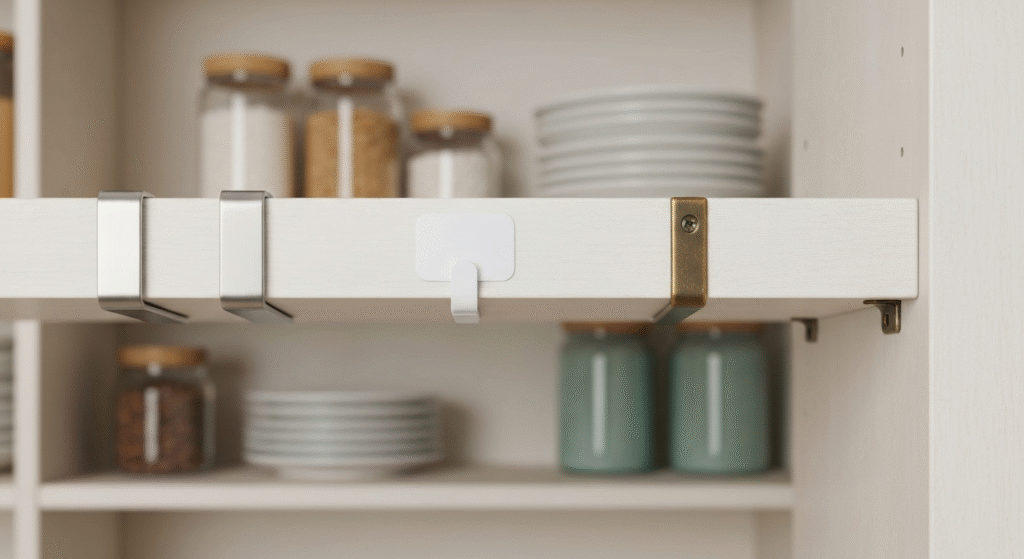
Selecting the perfect under-shelf hook isn’t a one-size-fits-all situation. The right choice depends on what you plan to hang, the material of your shelves, and whether you’re renting or own your home. Getting this part right ensures your new system is both safe and effective.
Material Matters: Metal, Plastic, and Wood
The material of your hook affects its strength, appearance, and longevity. Each has its own set of advantages and is suited for different tasks.
| Material | Pros | Cons | Best For |
| Metal (Stainless Steel, Bronze) | Highly durable, high load capacity, sleek appearance. | Can be more expensive, may scratch delicate items. | Coffee mugs, measuring cups, small pans, utensils. |
| Plastic (ABS, Acrylic) | Lightweight, inexpensive, comes in many colors. | Lower load capacity, can become brittle over time. | Snack bags with clips, oven mitts, lightweight utensils. |
| Wood (Bamboo, Beech) | Warm, natural aesthetic, gentle on items. | Lower load capacity, susceptible to moisture. | Tea cups, herb bundles, cloth napkins. |
For most pantries, stainless steel offers the best balance of durability and style. It can handle the weight of multiple ceramic mugs without bending and is easy to clean. However, if you’re just looking to hang bags of chips or pot holders, plastic hooks are a perfectly fine and budget-friendly option.
Installation Styles: Finding Your Perfect Fit
How a hook attaches to your shelf is just as important as its material. This choice often comes down to permanence and ease of installation, which is a major factor for renters.
| Installation Type | How It Works | Pros | Cons | Ideal User |
| Slide-On | A flat arm slides directly onto the shelf, held by tension. | No tools needed, easily repositionable, renter-friendly. | Only works on standard shelf thicknesses, moderate weight capacity. | Renters or anyone wanting a flexible, damage-free solution. |
| Adhesive | Attaches with a pre-applied strong adhesive strip. | Easy to install, no drilling, clean look. | Can damage surfaces upon removal, weight capacity varies by adhesive quality. | People with solid, non-porous shelves who want a semi-permanent option. |
| Screw-In | Mounts directly into the underside of the shelf with screws. | Highest load capacity, very secure and permanent. | Requires tools, leaves permanent holes in the shelf. | Homeowners with solid wood shelves looking for maximum strength. |
My advice for most people, especially those in apartments, is to start with slide-on hooks. They offer incredible flexibility. You can test different placements without any commitment. I once helped a client rearrange his entire pantry layout in under an hour using only slide-on hooks and baskets because nothing was permanent. If you have solid wood shelves and need to hang something heavier, like a small cast iron skillet, then screw-in hooks are the most trustworthy choice.
Understanding Load Capacity
Never underestimate the importance of load capacity. It’s the maximum weight a hook can safely hold. A hook designed for a tea towel will not support a bundle of bananas. Manufacturers usually state the load capacity on the packaging. Always respect this limit to avoid damaged items or broken shelves.
- Light-Duty (Under 1 lb): Perfect for oven mitts, small utensils, or bags of snacks.
- Medium-Duty (1-5 lbs): Ideal for most coffee mugs, measuring cup sets, and small baskets holding garlic or ginger.
- Heavy-Duty (5+ lbs): Reserved for screw-in hooks holding heavier items like bunches of bananas, small cutting boards, or pans.
Remember that the weight adds up. A rack with six hooks rated for 3 lbs each doesn’t necessarily mean it can hold 18 lbs total. The overall strength of the slide-on arm or adhesive strip is the true limiting factor.
The Art of Strategic Placement
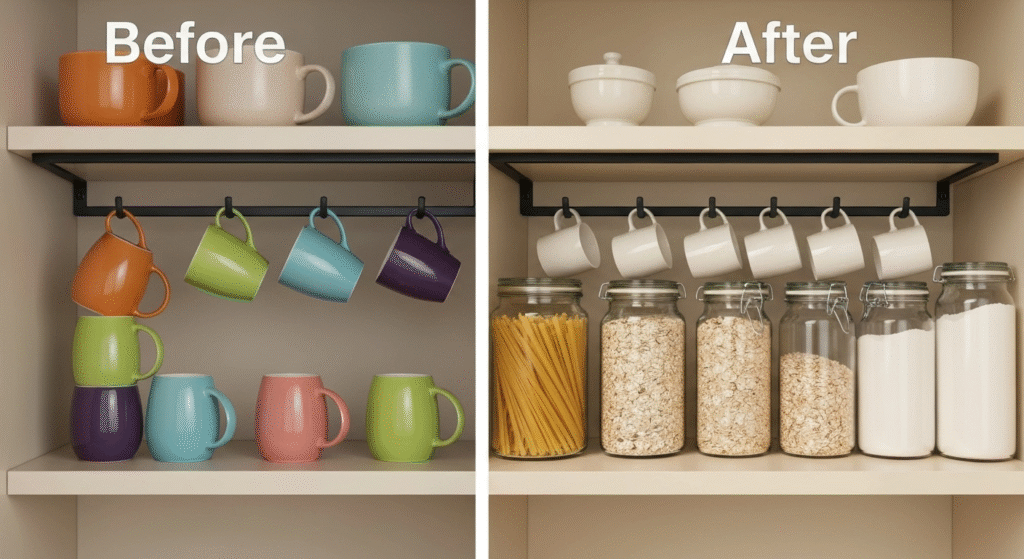
Where you place your hooks is just as important as which ones you choose. Thoughtful placement turns a simple storage addition into a highly efficient organizational system. The goal is to make your pantry work for you, reducing search time and daily friction.
The “Micro-Spacing” Advantage
This is a concept I use with all my clients. Micro-spacing is the art of using every last inch of that under-shelf airspace efficiently. Instead of using one large hook rack that creates wide, awkward gaps between items, consider using several smaller, individual hooks. This allows you to space items perfectly according to their size. For example, you can hang four individual whisks in the same space that a pre-set rack might only allow you to hang two. This approach prevents utensils from tangling and makes it effortless to grab exactly what you need without disturbing anything else. It’s about customizing the space to fit your items, not the other way around.
Group by Category and Frequency
Organize your hanging items just as you would organize the items on your shelves. This creates a logical, intuitive system.
- Create Zones: Dedicate one area for coffee mugs, another for baking utensils, and a third for grab-and-go snacks. This “zoning” technique means you always know exactly where to look.
- Prioritize by Use: Hang your most-used items in the most accessible, front-and-center spots. That favorite morning coffee mug should be right at the front. The specialty utensils you only use for holiday baking can be placed further back. This simple logic saves you from having to reach past other items, which is a common cause of clutter and breakage.
A Real-World Transformation
I recently worked with a client named Mark whose pantry was a source of constant frustration. His main issue was mugs. He had a collection of over a dozen mugs stacked in wobbly columns on his top shelf, taking up prime real estate needed for food. He thought his only option was to get rid of them.
We tackled the problem with two slide-on under-shelf racks, each with six hooks. We installed them side-by-side under that top shelf. Instantly, all 12 of his mugs had a new, secure home, hanging neatly in the previously empty airspace. The result? We freed up the entire top shelf. This space, once dedicated to a teetering tower of ceramic, was now perfectly organized with his canisters of flour, sugar, oats, and pasta. It was a simple, 15-minute fix that completely changed the functionality of his pantry.
Creative and Practical Uses for Under-Shelf Hooks
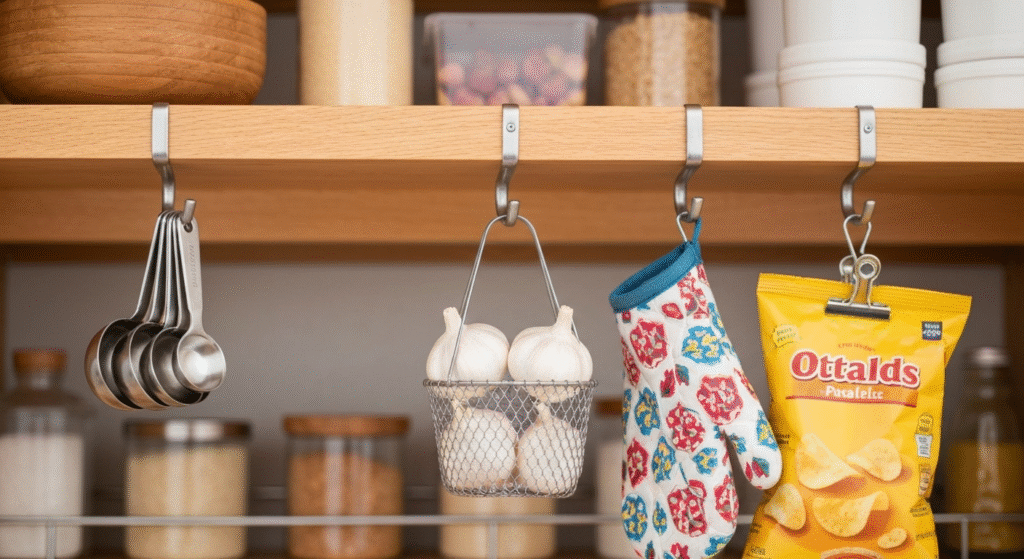
You can hang much more than just coffee mugs. With a little creativity, under-shelf hooks can help you organize a wide variety of pantry items.
- Measuring Cups and Spoons: Keep them untangled and easy to grab. No more digging through a drawer to find the 1/4 teaspoon.
- Small Kitchen Utensils: Whisks, spatulas, ladles, and tongs are perfect candidates.
- Snack Bags: Use a small clip to close a bag of chips or pretzels, then hang the clip from a hook. This keeps them fresh and prevents them from getting crushed at the bottom of a basket.
- Lightweight Produce: Hang bunches of bananas to prevent bruising, or use a small mesh bag for garlic and shallots.
- Bundles of Fresh Herbs: Tie herbs like rosemary or thyme with twine and hang them to dry.
- Oven Mitts and Pot Holders: Keep them close to the kitchen door for easy access without taking up drawer space.
- Small Baskets: Hang a miniature wire or cloth basket from a sturdy hook to hold small, loose items like spice packets, tea bags, or bouillon cubes.
Common Mistakes to Avoid
While hooks are simple, there are a few common pitfalls that can undermine their effectiveness. Avoiding these will ensure your pantry stays organized and functional.
- Ignoring Weight Limits: This is the most critical mistake. Overloading a hook can lead to it falling, potentially breaking your items and damaging your shelf. Always err on the side of caution.
- Blocking Shelf Access: Before you install a hook, make sure the hanging items won’t obstruct your ability to see or access the items on the shelf below. There should be enough clearance to easily remove a can or box.
- Using the Wrong Hook for the Surface: Never use adhesive hooks on unfinished, rough, or porous wood, as they won’t stick properly. Likewise, don’t try to use a slide-on hook on a shelf that is too thick or too thin, as it won’t be secure.
- Creating Visual Clutter: The goal is organization, not more chaos. If you hang too many disparate and colorful items, it can look messy. Try to stick to hanging similar items together to maintain a clean, orderly look.
Frequently Asked Questions
Can under-shelf hooks damage my pantry shelves?
It depends on the type. Screw-in hooks will leave small, permanent holes. Adhesive hooks can sometimes strip paint or finish upon removal, especially if left on for a long time. Slide-on hooks are the safest, most damage-free option and are highly recommended for renters.
Are adhesive hooks strong enough to hold coffee mugs?
Some heavy-duty adhesive hooks are rated for several pounds and can hold a single mug. However, be sure to check the manufacturer’s weight limit and apply it to a clean, smooth surface. For multiple mugs, a slide-on or screw-in rack is a much safer and more reliable choice.
How do I measure my shelf for a slide-on hook?
Simply use a ruler or tape measure to determine the thickness of your shelf. Most slide-on hooks are designed to fit standard shelf thicknesses, which are typically between 5/8 inch and 1 inch. The product description will almost always list the compatible shelf thickness.
Can I use these hooks in kitchen cabinets too?
Absolutely! Under-shelf hooks work just as well inside cabinets as they do in a pantry. They are perfect for organizing mugs, cooking utensils, or cleaning supplies under a cabinet shelf, freeing up valuable space inside.
Conclusion
The humble under-shelf hook is one of the most effective and affordable tools for reclaiming wasted pantry space. By learning to see the potential in the empty airspace beneath your shelves, you can dramatically increase your storage capacity and create a more intuitive, organized system. Whether you choose a simple slide-on rack for your mugs or strategically place individual hooks for your utensils, you are taking a powerful step toward a clutter-free kitchen. Stop stacking and start hanging—your pantry will thank you for it.

Hi, I’m Edom Clark, the creator and writer behind Taanzo. For the past five years, I’ve been exploring and writing about kitchen storage and home organization. My experience comes from both personal experimentation and hands-on observation — testing different storage systems, materials, and layouts to find what truly works in everyday homes. Over time, I’ve come to appreciate how small adjustments in storage can transform the way we cook, clean, and even enjoy time in the kitchen. Through Taanzo, I aim to share that knowledge in a way that’s honest, approachable, and genuinely useful.

