
Hidden pull-out panels for spices and sharp tools are one of the best ways to create a clean, organized, and highly functional kitchen. It’s frustrating to have countertops cluttered with spice racks and bulky knife blocks, especially in a smaller space where every inch counts. You want a kitchen that feels open and efficient, a place where everything you need is right at your fingertips but completely out of sight. The solution lies in using the overlooked vertical spaces in your kitchen, transforming them into sleek, concealed storage for your most-used items.
For the past five years, I’ve been helping homeowners solve these exact storage puzzles. My work in kitchen organization has shown me a clear trend: people are moving away from countertop clutter and towards integrated, hidden solutions. I became particularly passionate about pull-out panels after working with a client in a narrow galley kitchen who thought they had no room for proper spice or knife storage. We designed a slim 6-inch pull-out panel next to their stove, and it completely changed how they used their space. It’s moments like these that drive my passion for finding clever ways to make every kitchen more beautiful and practical.
What Exactly Are Hidden Pull-Out Panels?
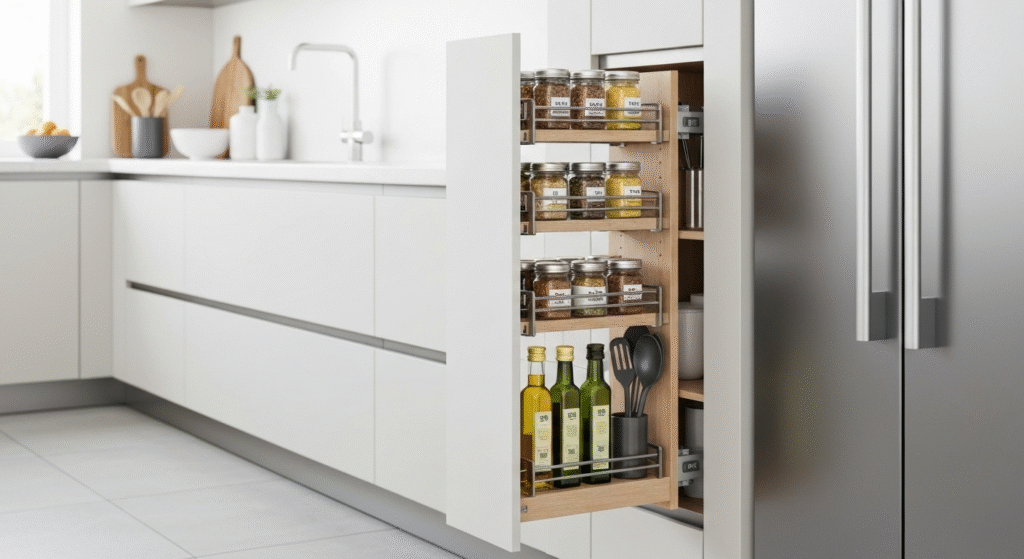
Hidden pull-out panels are narrow, vertical storage cabinets that slide out from otherwise unused spaces in your kitchen. Think of the small gaps next to your refrigerator, stove, or at the end of a cabinet run. Instead of being covered with a decorative filler strip, that space can house a fully functional, multi-tiered storage system. Unlike a standard drawer or shelf, these panels are designed for vertical organization, making them perfect for items like spice jars, cooking oils, and, most importantly, knives. They remain completely concealed behind a panel that matches your existing cabinetry, creating a seamless, uninterrupted look.
The magic of these systems is their ability to provide instant access. When closed, your kitchen looks clean and uncluttered. With a gentle tug or a push on a touch-latch system, a tower of perfectly organized supplies glides out, ready for use. It’s a sophisticated approach that combines the best of minimalism and practicality.
The Genius of Combining Spice and Knife Storage
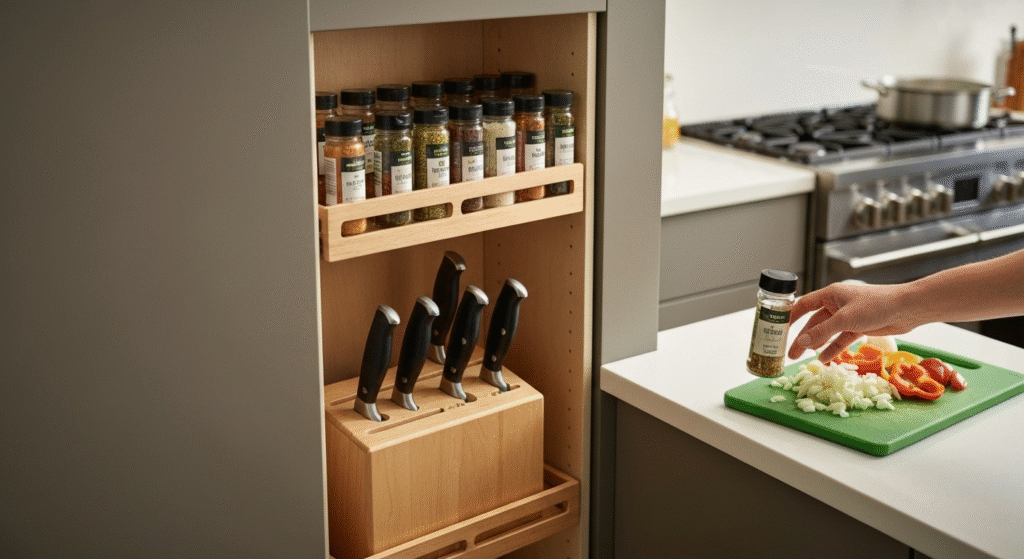
At first, storing sharp knives next to glass spice jars might sound unusual, but it’s actually a brilliant pairing for kitchen efficiency. Most home cooks use spices and knives together during meal prep. By consolidating them into a single, strategically placed pull-out panel, you create an incredibly efficient workflow.
Here’s why this combination works so well:
- Creates a Prep Zone: Placing a combined panel next to your stove or main prep counter means everything you need is in one spot. You can grab your onions, your chef’s knife, and your spices without taking a single extra step.
- Maximizes Narrow Spaces: The slim profile required for both spice jars and knives makes them perfect companions for a narrow pull-out. A cabinet that is too thin for pots or plates is often the ideal width for this dual purpose.
- Enhances Safety: Storing knives in a dedicated insert within a closed panel is far safer than leaving them on the counter in a block, especially in households with children. It keeps sharp edges securely tucked away.
- Protects Your Tools: A proper panel protects your knife blades from getting nicked in a crowded drawer and keeps your spices away from the light and heat that can degrade their flavor.
I recently helped a family design a panel for their kitchen island. The parents were worried about their curious toddler reaching the knife block. We installed a push-to-open panel with a magnetic child lock on the side of the island facing the stove. It kept the knives completely inaccessible to the child while creating the perfect, streamlined prep station for the parents.
Designing Your Panel: Key Considerations Before You Start
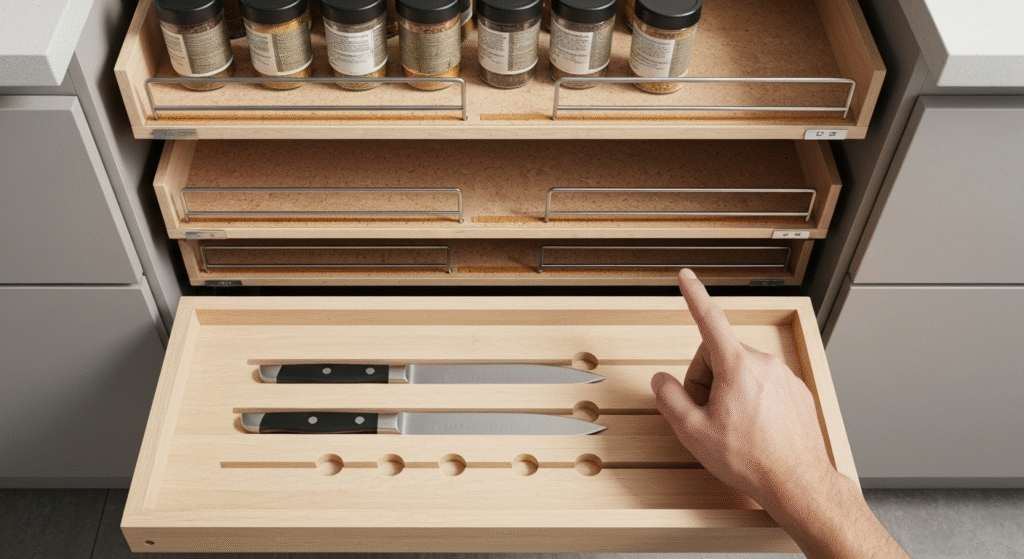
A successful hidden panel isn’t just about finding a gap; it’s about thoughtful design that matches your kitchen habits and hardware. Rushing this stage can lead to a wobbly panel or one that doesn’t quite fit your favorite spice jars.
Location, Location, Location
The placement of your pull-out panel will determine how useful it is. The goal is to reduce steps and make your cooking process smoother.
- Next to the Cooktop: This is the most popular and practical location. It allows you to access oils, spices, and utensils right where you’ll be using them.
- In the Kitchen Island: An island is a central hub of activity. A pull-out here can serve as a primary prep station, keeping the island’s surface clear for chopping and mixing.
- At the End of a Cabinet Run: The space between the last cabinet and a wall is often wasted. It’s a prime spot for a slim pull-out that can hold a surprising amount of gear.
- Behind a Backsplash: For a truly custom and concealed look, a horizontal or vertical panel can be built into a deeper section of the wall, hidden behind what looks like a solid piece of backsplash. This is a more complex installation but offers a stunning, high-end result.
Getting the Mechanics Right: Slides and Hardware
The slide mechanism is the heart of your pull-out panel. This is not the place to cut costs. Cheap hardware will lead to a panel that rattles, sticks, or sags over time. A client once insisted on using budget slides for a heavy-duty panel intended for oils and tall spice jars. Within six months, the slides were straining and making a terrible grinding noise. We had to replace them with a heavy-duty, soft-close option that could handle the weight smoothly.
Here’s a comparison of common slide types to help you choose the right one:
| Slide Type | Pros | Cons | Best For |
| Ball-Bearing Slides | Smooth operation, can handle significant weight. | Can be noisy if not high-quality; requires precise installation. | Heavy panels holding bottles of oil, vinegar, and many spice jars. |
| Soft-Close Slides | Prevents slamming, quiet and controlled motion. | More expensive than standard slides. | Any kitchen where a quiet, high-end feel is desired; prevents jars from rattling. |
| Push-to-Open Slides | Allows for a handleless, seamless cabinet front. | Can be accidentally opened by leaning against it. | Modern and minimalist kitchens aiming for a completely flat-front look. |
| Undermount Slides | Completely hidden when the panel is open. | Can be more complex to install; may have lower weight capacity. | Achieving a clean, professional look where hardware is invisible. |
The Critical Details: Safety Spacing and Jar Stability
Simply having a panel isn’t enough; it needs to be organized in a way that is safe and secure. This is where experience really comes into play, as the small details make a huge difference.
For Knives: Proper spacing is non-negotiable.
- Blade Clearance: Ensure there is at least a half-inch of space between knife slots. This prevents the blades from knocking against each other, which can dull or chip them.
- Handle Room: The slots should be staggered or spaced far enough apart so you can get a firm, safe grip on the handle without your knuckles hitting the knife next to it. One client with large hands found their initial knife insert unusable because the handles were too close together. We had to create a custom insert with wider spacing.
- Secure Holders: The best inserts are made of wood or dense food-grade polymer. They should hold the knives snugly without forcing them in. Magnetic strips can also be used, but ensure the magnet is strong enough to prevent any movement when the panel is opened or closed.
For Spices: The biggest enemy is vibration. A panel that closes too abruptly can send jars rattling.
- Anti-Vibration Liners: A thin cork or rubber liner at the bottom of each shelf can absorb shock and keep jars from shifting. It’s a simple, inexpensive addition that makes a world of difference.
- Custom Inserts: For a truly stable setup, consider angled spice inserts. These hold each jar in its own tilted slot, making labels easy to read and preventing any movement.
- Guard Rails: Every shelf holding spices or bottles should have a small railing or lip to prevent items from tipping over and falling into the cabinet mechanism.
Material and Style: Matching Panels to Your Kitchen Decor
A hidden panel should be just that—hidden. The exterior must blend perfectly with your existing cabinetry. However, the interior can be customized to match your personal style and functional needs.
For the Modern, Minimalist Kitchen
Modern kitchens are all about clean lines and uncluttered surfaces. The panel should enhance this aesthetic, not disrupt it.
- Exterior: A flat, handleless panel front is essential. Use a push-to-open mechanism to maintain the seamless look. The finish should be identical to your other cabinets, whether it’s high-gloss white, matte black, or a sleek wood veneer.
- Interior: Stainless steel or maple wood interiors offer a clean, durable finish. Simple, functional inserts for knives and spices work best. Avoid ornate details. The focus should be on function and high-quality materials.
For the Rustic or Traditional Kitchen
In a rustic or traditional kitchen, the panel can have a bit more character, but it should still feel integrated.
- Exterior: The panel front should be designed to look like a decorative column or a part of the cabinet frame. It can feature the same shaker-style profile or raised panel design as your other doors. A decorative knob or pull that matches your existing hardware will complete the look.
- Interior: Natural woods like oak, cherry, or walnut create a warm, inviting feel. Custom-milled wood inserts for knives and spices can add a touch of craftsmanship. The goal is to make the inside feel just as thoughtfully designed as the outside.
Installation Insights: DIY vs. Professional Help
One of the most common questions I get is whether this is a project for a weekend warrior or if it requires a professional. The answer depends on your skill level and whether you are retrofitting into an existing kitchen or planning for a new build.
When DIY is a Good Option:
If you are comfortable with precise measurements, using a level, and driving screws, you can likely handle installing a pre-made pull-out unit. These often come as a single “cassette” that you simply screw into the inside of a narrow cabinet box. This is common in new kitchen installations where you can plan for a dedicated 6-inch or 9-inch cabinet.
When to Call a Professional Carpenter or Cabinet Maker:
Retrofitting a panel into an existing run of cabinets is a different story. It often involves carefully removing filler strips, potentially modifying the adjacent cabinet box, and building a custom frame for the pull-out.
- A Real-World Example: I once consulted on a project where a homeowner tried to retrofit a panel himself. His measurements were off by a mere quarter of an inch. As a result, the panel front scraped against the neighboring cabinet every time it was opened. Fixing it required rebuilding the entire frame. Hiring a pro from the start would have saved him time, money, and a lot of frustration. A professional ensures everything is perfectly square, level, and operates smoothly for years to come.
Maintaining Your Hidden Panel for Long-Term Use
Your hidden panel is a moving part, so a little bit of maintenance will keep it gliding smoothly.
- Clean the Tracks: Once or twice a year, wipe down the metal slide mechanisms with a dry cloth to remove any dust or kitchen grease that may have accumulated. Avoid using oily lubricants, as they can attract more grime.
- Wipe Down Inserts: Regularly wipe down the spice shelves and knife block inserts. For wood inserts, use a damp cloth and dry immediately.
- Check for Tightness: Periodically check the screws holding the slides to the cabinet and the panel. Vibrations from daily use can sometimes cause them to loosen slightly over time.
Frequently Asked Questions
Can these panels be installed in an existing kitchen?
Yes, it is possible to retrofit a pull-out panel, but it is a more advanced project. It usually involves removing a filler strip between cabinets and building a custom box. For this type of installation, hiring a professional cabinet maker is highly recommended to ensure a perfect fit and smooth operation.
How much weight can a typical pull-out panel hold?
Weight capacity is determined entirely by the quality of the slide hardware. Standard-duty slides might hold around 75 pounds, while heavy-duty, ball-bearing slides can often support 100 pounds or more. Always check the manufacturer’s specifications and choose slides that can comfortably handle the weight of your items, especially if you plan to store heavy bottles of oil.
Are hidden panels expensive?
The cost can vary dramatically. A simple, DIY-friendly pull-out unit from a hardware store might cost a few hundred dollars. A custom-built, professionally installed panel made from high-end materials with soft-close hardware could cost significantly more, often running over a thousand dollars as part of a larger kitchen renovation.
How do you clean inside the narrow cabinet space?
A vacuum with a long, narrow crevice tool is perfect for cleaning out the bottom of the cabinet box. For wiping down the interior walls, a microfiber cloth wrapped around a ruler or paint stirrer works well to reach into the tight space.
Conclusion: A Small Change for a Big Impact
Hidden pull-out panels for spices and sharp tools are more than just a clever storage trick; they are a fundamental part of a well-designed, modern kitchen. By transforming wasted slivers of space into functional powerhouses, you can drastically reduce countertop clutter, improve your cooking workflow, and enhance the overall safety of your kitchen. Whether you are planning a full renovation or just looking for a high-impact upgrade, integrating a concealed panel is a decision that pays off every single time you cook a meal. It’s a simple, elegant solution that brings you one step closer to the clean, organized kitchen you’ve always wanted.

Hi, I’m Edom Clark, the creator and writer behind Taanzo. For the past five years, I’ve been exploring and writing about kitchen storage and home organization. My experience comes from both personal experimentation and hands-on observation — testing different storage systems, materials, and layouts to find what truly works in everyday homes. Over time, I’ve come to appreciate how small adjustments in storage can transform the way we cook, clean, and even enjoy time in the kitchen. Through Taanzo, I aim to share that knowledge in a way that’s honest, approachable, and genuinely useful.

